"*" indicates required fields
Manhattan Elevator & Escalator Accident Lawyer
Legally Reviewed by Mark Gray on June 8, 2026New York City has laws that govern elevator maintenance, inspection, and installation. While special training is required for elevator inspections, people can still suffer catastrophic injuries from an escalator or elevator malfunction.
Escalators and elevators make moving from the bottom floor of a building to the top much easier, faster, and more efficient – yet all it takes is one missed inspection leading to a machine that should be out of service, leaving you injured.
Fortunately, Gray Injury Law believes in bringing justice to clients who have been victims of escalator and elevator accidents. With years of experience in this practice area, we are happy to provide you with a free appointment, free case evaluation, and an in-depth discussion about your available options before proceeding with your case.
⚠ Time-Sensitive: New York Law Limits Your Window to File
In most New York elevator and escalator accident cases you have three years to file a lawsuit, but if a government entity such as NYCHA or the MTA owns the property, you may have as little as 90 days to file a notice of claim.
Gray Injury Law has helped injured New Yorkers in Manhattan for nearly thirty years. We work on a contingency-fee basis, so you pay nothing unless we recover compensation for you.
Common Causes of Escalator & Elevator Accidents
One of the most common ways to get injured is slipping and falling. In fact, slip and fall accidents are more common than most people realize. With machinery like escalators and elevators, the number of ways you can get injured increases significantly.
Millions of people in the New York City area use both escalators and elevators on a daily basis when commuting to and from work, entering and exiting a building, and more.
Elevator and escalator accidents are a documented and growing risk in New York City. By November 2023, the New York City Department of Buildings reported that its Elevator Unit had responded to 100 accidents involving injuries, up from 76 in all of 2022 and 50 in 2021, even though these devices complete an estimated one billion trips a year across the city. With more than 70,000 elevators and escalators in operation, even a single skipped inspection can put riders at serious risk.
Most injuries are the fault of negligent maintenance. All it takes for a New York City escalator to not function properly is improper maintenance, turning it into a tripping hazard. Property owners should address all repairs immediately rather than waiting until it is too late.
If you are the victim of an elevator or escalator accident in Manhattan, Gray Injury Law has an experienced team of personal injury professionals who will take on your case to get you the compensation you deserve.
Elevator Accident Cases
An elevator is used to transport you from one floor of a building to another. Elevators have evolved quite a lot since their creation, including the elevator shaft and elevator doors, so they are now much more complex pieces of machinery.
Any faulty wiring, malfunction, or failure to repair damage can lead to sudden stops, serious injury, and in extreme cases, even death.
Some ways elevators can lead to serious injuries are door entrapment, improper hoist cable maintenance, communication failure, and safety device failure. If the equipment is not properly maintained or checked during inspections, elevators can cause serious harm.
Escalator Accidents
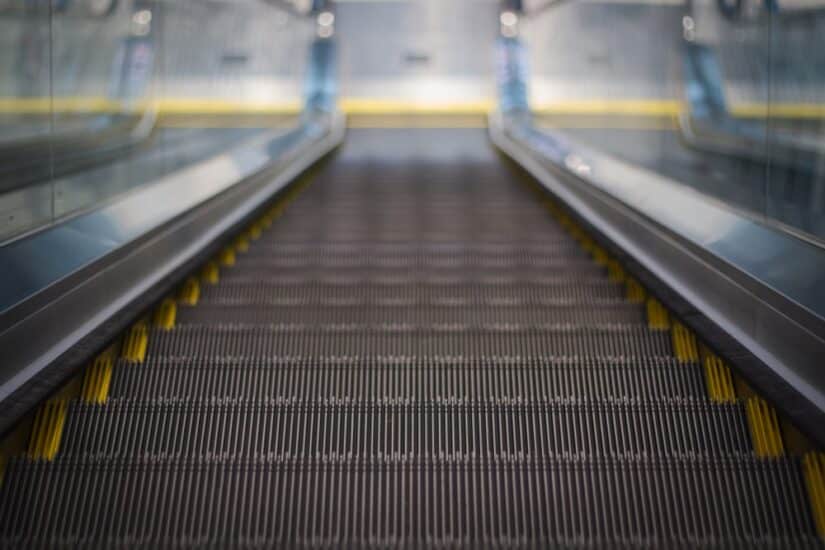
Escalators are present in subway stations, train stations, and department stores. Wherever you are using an escalator, these machines can be used to transport you from one floor to another – just like elevators.
When it comes to escalators, unfortunately, the most common victims of escalator injuries are young children. Childrens’ small frames make something like a sudden stop detrimental, leading to injury.
While there have been various precautions to help prevent children from severe injury, many are not properly maintained.
Some reasons escalator accidents occur are mis-leveling, sudden acceleration, sudden deceleration, overspeed conditions, communication failure, and safety device failure.

Liability of Property Owners
For the most part, accidents caused by dangerous conditions on someone else’s property are covered under premises liability law. When determining who is responsible for escalator accidents and elevator accidents, there are a few things to take into account.
If the owner of a property fails to keep up with standard maintenance procedures or complete routine inspections, their negligence leaves them responsible. A property owner is responsible for ensuring their property is safe and free of dangerous conditions – meaning they are liable for a personal injury due to their negligence.
If you aren’t sure what exactly is considered negligence, it is any failure to maintain safe conditions that leads to an injury accident. Gray Injury Law is experienced in elevator and escalator accidents. If you qualify for an NYC premises liability case, contact the Gray Injury Law to get a free consultation with a New York premises liability attorney.
Some common causes of escalator and elevator injuries for which the property owner would be responsible are faulty mechanics, unattended repairs, and broken or cracked surfaces.
Property owners are not always the only party responsible for an elevator or escalator accident. Depending on how the accident happened, liability may also extend to the building’s property management company, the elevator or escalator maintenance company hired to service the equipment, the manufacturer of a defective component, the contractor that installed the system, or an inspector who signed off on equipment that was not actually safe. Identifying every responsible party matters, because it can determine how much compensation is available to you.
If you were injured on a construction-site elevator, hoist, or material lift while working, a different and stronger law may apply. New York Labor Law Section 240, known as the Scaffold Law, can hold owners and general contractors strictly liable for gravity-related accidents involving this kind of equipment. You can learn more on our construction accident page.
If a property is publicly owned, government agencies will instead be liable. The best way to ensure your rights are upheld is to hire an elevator injury lawyer or have escalator accident attorneys on your side.
Time Limits for Filing an Elevator or Escalator Accident Claim
New York law puts a strict deadline on how long you have to take legal action after an elevator or escalator accident. For most personal injury claims, the statute of limitations is three years from the date of the accident. If you miss this deadline, the court can permanently bar you from recovering compensation, no matter how strong your case is.
Shorter deadlines apply when a government entity is involved. If the accident happened in a publicly owned building or transit location, such as a New York City Housing Authority building or an MTA subway station escalator, you generally must file a formal notice of claim within 90 days of the accident before you can sue. Because these timelines move quickly and the rules depend on who owns the property, it is wise to speak with an attorney as soon as possible after an accident.
What To Do After An Elevator or Escalator Accident
When you suffer from an escalator accident or an elevator accident, it’s important to tend to any personal injuries as soon as possible.
Because escalator accidents and elevator accidents can cause potentially life-threatening injuries, it’s important to see a doctor or go to the hospital immediately. If you are unable to move freely, call 911.
Gray Injury Law’s experienced personal injury professionals will use your medical records to ensure you receive appropriate compensation, so be sure your injuries have been properly documented.
New York elevator accident lawyers and escalator accident lawyers recommend reporting the incident as soon as your injuries have been tended to. You should also take photos of the accident scene as evidence.
Benefits of Attorneys For Elevator and Escalator Incidents
Gray Injury Law is happy to provide you with an escalator and elevator accident lawyer who Manhattan residents can rely on. Having a lawyer represent you in court is ideal if the other party’s insurance company is unwilling to provide a fair settlement.
Dedicated to providing you with the service you deserve, we can extend legal help when you need us – even if it’s on short notice. At Gray Injury Law, we are happy to provide you with a free case evaluation and in-depth consultation to review your options.
There are many benefits of having a personal injury lawyer on your side when building a case. First, a personal injury lawyer can assist with proving a property owner’s fault by establishing that the conditions under which the accident occurred were dangerous due to the owner’s negligence.
New York Personal injury lawyers can also help you by interpreting the law, calculating damages, and negotiating settlements. When you are dealing with escalator accidents or elevator-related injuries, seeing all of the unfamiliar wording and abundance of numbers can be overwhelming – but a lawyer can translate and calculate everything for you. Contact Gray Injury Law to get the help you need. We work on a contingency fee basis, so you only pay if we win you compensation.
Frequently Asked Questions About Elevator and Escalator Accidents
Do I have an elevator or escalator accident case?
Who can be held liable for an elevator or escalator accident in NYC?
How long do I have to file an elevator or escalator accident claim in New York?
Does the Scaffold Law apply if I was hurt on a construction-site elevator?
How much does it cost to hire a Manhattan elevator accident lawyer?
Similar Practice Areas
Contact Us
Contact
"*" indicates required fields