
At What Age Can Kids Sit in the Front Seat of a Car in New York?
Legally Reviewed by Mark GrayChild passenger safety should be a top priority for parents and guardians. In New York State, while there is no specific law dictating the exact age at which a child can sit in the front seat, safety experts and traffic authorities strongly recommend that children under the age of 13 ride in the back seat. New York’s child restraint requirements are governed by Vehicle and Traffic Law § 1229-c, which sets mandatory restraint rules based on a child’s age, weight, and height — but does not restrict seating position by age alone.
NY Child Passenger Safety Laws
Although there is no legal age for a front seat in NY, the state has strict child restraint laws to protect young passengers. These laws specify the type of child safety seat required based on a child’s age, weight, and height:
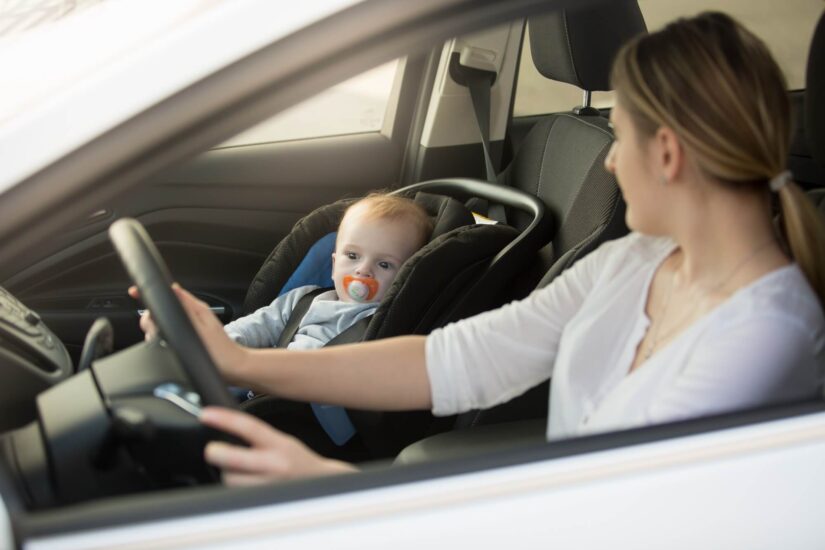
Children Under 2 Years Old
Must ride in a rear-facing car seat until they exceed the height and weight limits set by the seat’s manufacturer. Rear-facing seats offer the best protection for a child’s head, neck, and spine in the event of a crash, as they distribute impact forces across the seat rather than the child’s body.
Children Under 4 Years Old
Must be restrained in a federally approved child safety seat. Parents should ensure the car seat is installed correctly, as improper installation can significantly reduce the seat’s effectiveness. Many local fire stations and law enforcement agencies offer free car seat inspection services to assist parents with a correct car seat.
Children Ages 4 to 7
Must use an appropriate child restraint system, such as a forward-facing car seat or a booster seat, depending on their size. Booster seats are designed to elevate children so that adult seat belts fit correctly, ensuring proper protection in a crash. The seat should meet the child’s size and weight recommendations set by the manufacturer.
Children Ages 8 to 15
Must use a seat belt while riding in a motor vehicle. However, simply wearing a lap and shoulder belt is not always sufficient—it must fit properly. A child who is too small for a standard seat belt should continue using a belt-positioning booster seat to prevent the seat belt from riding up on the abdomen or neck, which can cause serious injuries in a crash.
Why are Children Under 13 Advised to Sit in the Back Seat?
While there is no specific front seat age requirement in NY under car seat laws, the New York State Governor’s Traffic Safety Committee (GTSC) strongly advises that all children under 13 years old ride in the back seat.
Research from the National Highway Traffic Safety Administration (NHTSA) supports this recommendation. It shows that children are significantly safer in the rear seat than in the front.
Risks of Children Sitting in the Front Seat Too Early
While there is no specific legal age for sitting in a front seat in NY, the risks increase for children sitting in the front seat too early.
Airbag Deployment Risks
Front airbags are designed for adult passengers and deploy at speeds of 100-200 mph. If a child is sitting in the front seat and an airbag deploys, it can cause severe head, neck, or chest injuries, especially for children who are not tall enough for the seat belt to fit correctly.
Higher Impact Forces in the Front Seat
In frontal collisions, the front seat almost always experiences greater impact forces than the back seat. Since children’s bodies are still developing, they are more vulnerable to injury from these forces.
Improper Seat Belt Fit
Seat belts are designed for adults. If a child is too small, the lap belt may rest on the stomach instead of the hips, and the shoulder belt may cross the face or neck rather than the chest. In a crash, this can lead to internal injuries, spinal damage, or suffocation.
Exceptions and Special Considerations
There are situations where an older child may need to ride in the front seat, such as:

- When the vehicle does not have a back seat (e.g., a single-cab truck).
- If all rear seats are occupied by younger children in car seats, an older child must sit in the front.
- Medical or special needs that require a child to be seated in a particular location in the car.
In these cases, parents should take extra precautions to ensure car seat safety:
- Move the front passenger seat as far back as possible to increase the distance between the child and the airbag.
- Ensure the child wears a properly fitted seat belt at all times.
- Deactivate the front passenger airbag if the vehicle has this feature.
When Can Kids Sit in the Front Seat of a Car in New York?
New York law does not set a specific age at which a child can or cannot sit in the front seat. Vehicle and Traffic Law § 1229-c governs child restraints based on age, size, and weight — not seating position. A child who is properly restrained in an age-appropriate seat or seat belt can legally ride in the front seat at any age under New York law.
The confusion around this question comes from the difference between what the law requires and what safety experts recommend. The New York State Governor’s Traffic Safety Committee and the National Highway Traffic Safety Administration both recommend that all children under 13 ride in the back seat because of the risk posed by front airbags. That recommendation carries no legal penalty — but it carries significant weight in the event of an accident where a child is injured.
From a personal injury standpoint, seating position matters. If a child under 13 was riding in the front seat at the time of a crash and sustained injuries that may have been reduced or avoided in the back seat, that detail can become relevant to how damages are assessed. Parents should understand that following safety recommendations — not just the legal minimum — is the safest course both for their child and for their legal standing if an accident ever occurs.
How Our New York Car Accident Lawyers Will Maximize Your Compensation if Your Child is Injured in a Car Crash
At Gray Injury Law, our experienced New York car accident attorneys will find the evidence to prove the liability of the negligent driver and aggressively negotiate with the insurance company to recover maximum compensation for your child’s injuries and future well-being.
Conduct a Thorough Investigation
We start by gathering critical evidence to establish fault. This includes police reports, eyewitness statements, surveillance footage, accident scene photos, and vehicle damage assessments. If necessary, we will work with accident reconstructionists to prove how the crash occurred and who was responsible.
Collect Medical Evidence to Prove the Extent of Injuries
Your child’s medical records, doctor’s reports, hospital bills, and prognosis evaluations will be key in determining the full extent of their injuries. We may collaborate with pediatric specialists and life care planners to assess long-term medical needs, including physical therapy, rehabilitation, and any future surgeries.
Calculate Full Damages, Including Future Costs
Children’s injuries can have lifelong consequences, so we ensure that all damages are accounted for. This includes:
- Medical expenses (current and future)
- Pain and suffering
- Emotional trauma
- Loss of quality of life
- Special education or adaptive equipment needs
Negotiate Aggressively with Insurance Companies
Insurance companies may minimize payouts in all types of personal injury claims. Our attorneys are skilled negotiators who push for maximum settlements, using compelling evidence and expert testimony to demand full compensation.
Take Your Case to Trial if Necessary
If the insurance company refuses a fair settlement, we will not hesitate to take the case to court. We have the skills and resources, and our trial lawyers have a strong track record of winning large settlements and verdicts in car accident cases.
At Gray Injury Law, we will fight for the justice and financial security your child needs after a traumatic accident. To schedule your free consultation, call us at 212-537-7000 or contact us online.
Frequently Asked Questions About Kids in the Front Seat in New York
These are the questions parents and guardians ask most often about child passenger safety laws in New York.
When can kids sit in the front seat in New York?
What age can a child sit in the front seat of a car?
Is it illegal for a child to sit in the front seat in New York?
When can kids stop using booster seats in New York?
What are the risks of a child sitting in the front seat too early?
What should I do if my child was injured in a car accident in New York?

About the Author
Founding Attorney, Gray Injury Law
Mark Gray founded Gray Injury Law in 1996 and has represented personal injury victims across Manhattan and New York State for nearly three decades. He holds a J.D. from Washington & Lee University and a B.A. from Boston University. Mark has handled numerous motor vehicle accident cases involving child passengers and is committed to holding negligent drivers accountable.
Contact Us
Contact
"*" indicates required fields